About This Project
The Murals on Main Street project is a community-driven effort to add vibrant, culturally rich murals to Ronan's downtown. Designed in collaboration with the Confederated Salish and Kootenai Tribes, these artworks tell stories through imagery, language, and design, creating an inviting streetscape that reflects the heart of our community.
How It Works
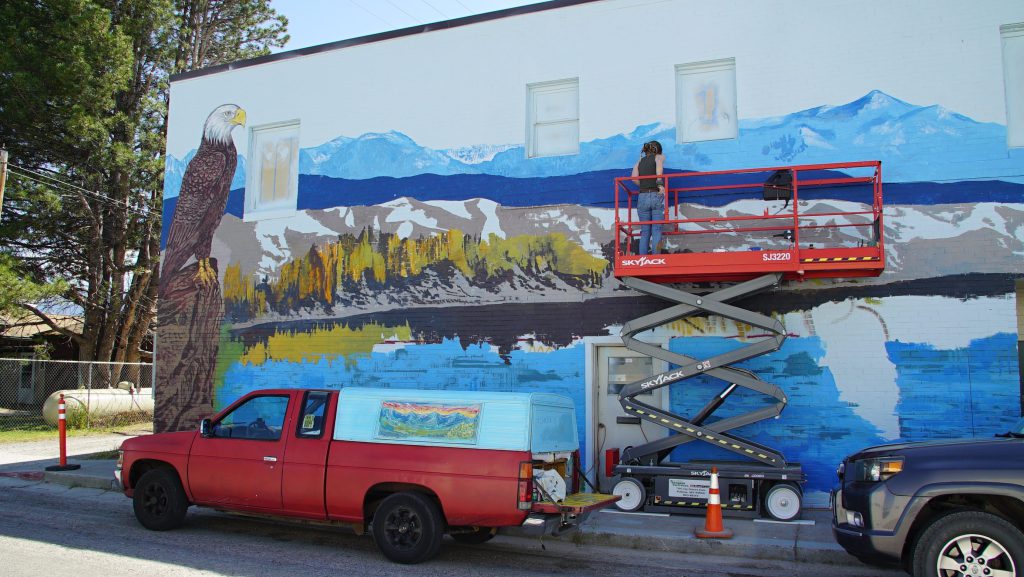
Murals are placed in high-visibility spots along Main Street and in public gathering areas. The design process involves local artists, tribal representatives, and public feedback to ensure cultural accuracy and visual impact. The project also lays the foundation for a future walking tour that links the murals to local shops, restaurants, and landmarks.
- Artist and community collaboration on mural concepts
- Public input on designs before installation
- Strategic placement for maximum visibility and foot traffic
- Opportunities for local and Native artists to lead the work
Why It Matters
This project is more than a quick fix. The designs and plans created now will guide future improvements for years to come, helping Ronan grow in a way that is safe, connected, and welcoming for everyone.
- Engages the community. From design to painting, the process involves artists, students, and residents, building pride and ownership in the final work.
- Supports future projects. This is the first step toward a self-guided walking tour that will connect art, history, and local commerce.
- Celebrates Indigenous heritage. Murals honor Salish and Kootenai traditions, language, and history, making culture visible and accessible to all.
- Revitalizes downtown. Public art transforms Main Street into a destination, attracting both residents and visitors to spend more time in the area.
The Spring Creek Mural
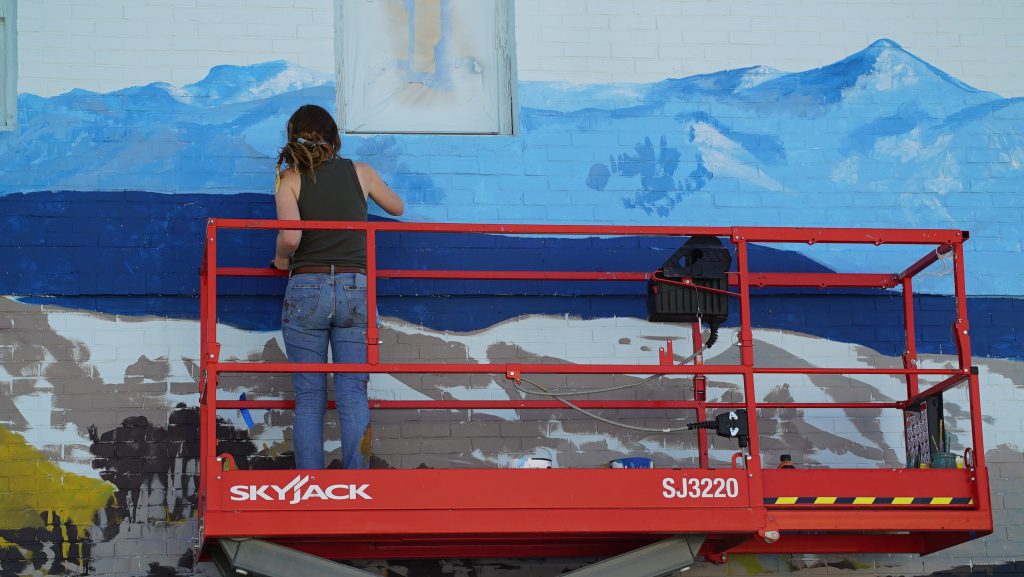
In 2025, Ronan unveiled the Spring Creek Mural, a vibrant, large-scale work celebrating Native identity and heritage. This mural reflects the deep cultural roots of the community and serves as an anchor piece for future public art downtown.
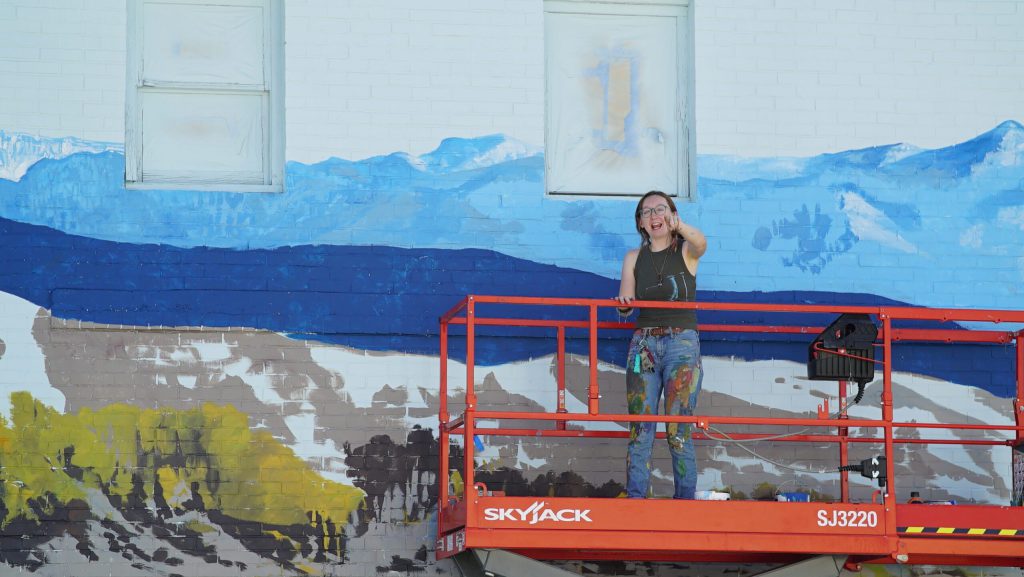
Cheyenne Marcus
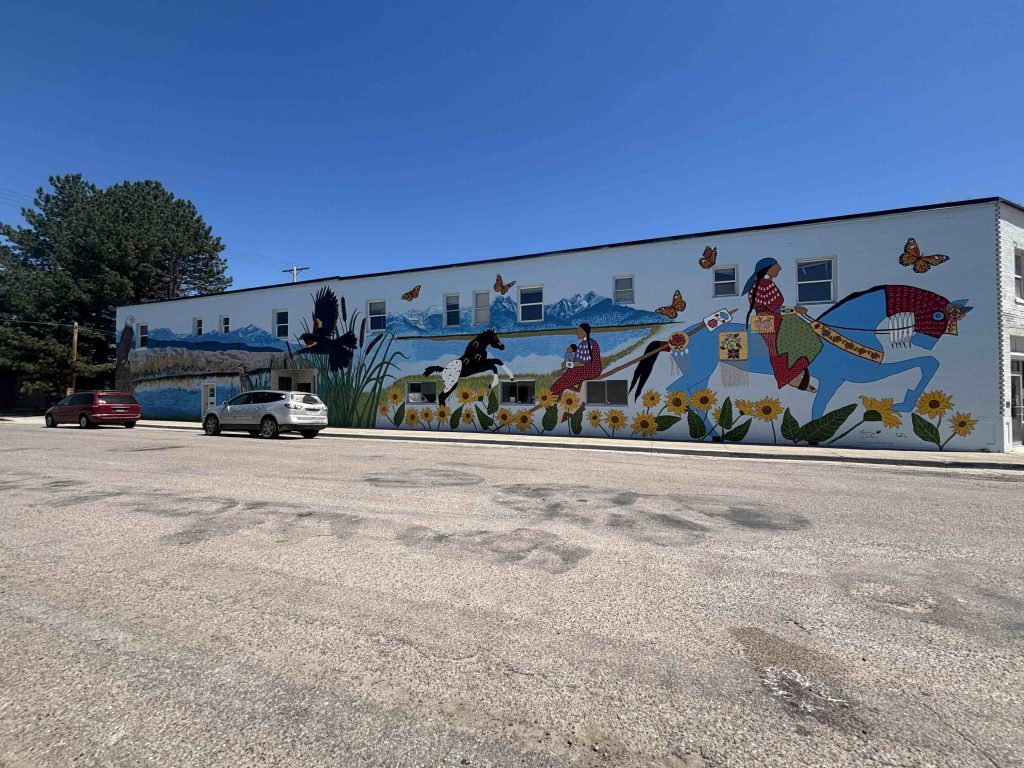
The 50in50 Project is Cheyenne's most recent adventure: a goal to paint a mural in 50 small towns across all 50 states by the end of 2025, highlighting areas that value scenic beauty and small businesses, and creating a documentary that highlights each community and the people doing amazing things for those around them. The main goal of the project is to take travelers off the beaten path, create awareness for small town tourism, and connect fifty communities to each other. Cheyenne believes art can be used as a tool to generate new perspectives, bringing vibrancy to areas lacking in color and recognition to the people who deserve it most. Starting in her hometown of Covington, Virginia, Cheyenne has traveled coast to coast painting since April of 2022, in towns with populations ranging from 200 to 60,000. Learn more at cheyennerenee.com.
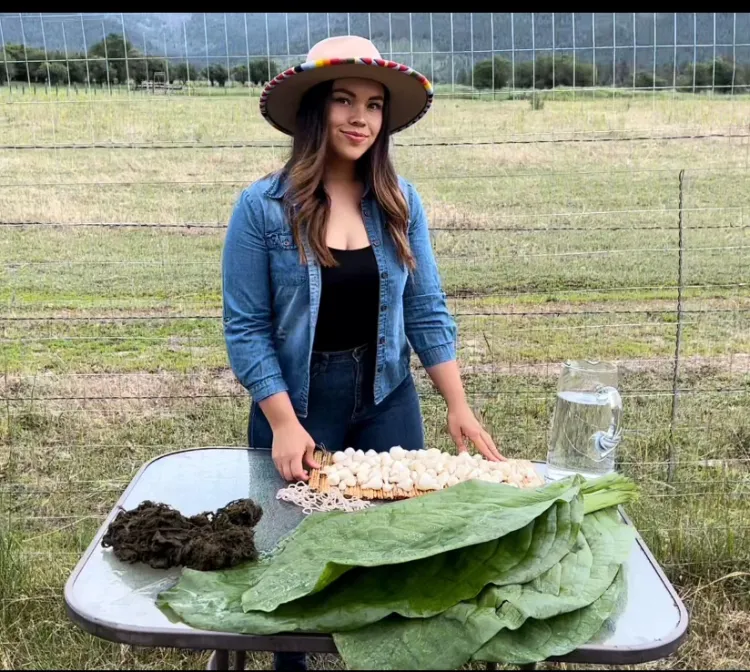
Aspen Decker
Aspen Decker is an enrolled member of the Confederated Salish and Kootenai Tribes (t̓at̓ʔayáqn, Ql̓ispè, and Ksanka) and a speaker of her tribal language, Nsélišcn (Salish). She holds a master's degree in linguistics from the University of Montana and a bachelor's degree in Tribal Historic Preservation from Salish Kootenai College, and has taught Salish for 10 years. Her passion for the language began as a child, learning from her elders, primarily Patlik Pierre, who taught her the importance of perpetuating Salish language and culture. Aspen owns Xʷlxʷilt ("Alive and Well"), a company dedicated to language revitalization and cultural preservation through education, art, and consulting. Learn more at xwlxwilt.com.
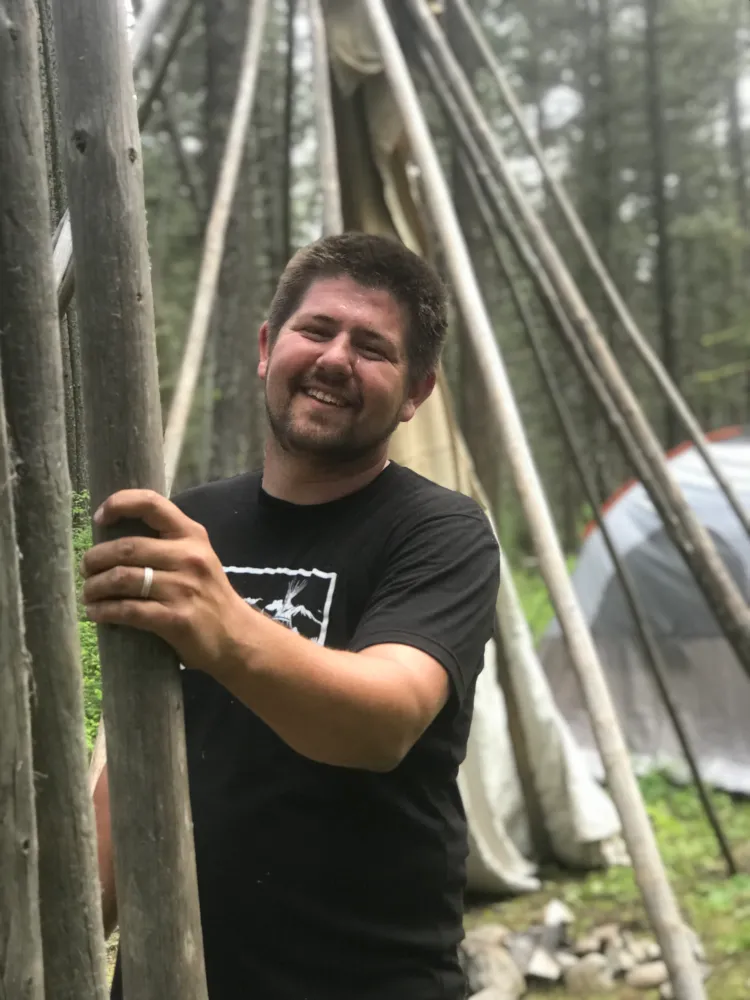
Cameron Decker
Cameron Decker is Diné (Navajo) and a descendant of the Confederated Salish and Kootenai Tribes. He is an artist and educator working in printmaking, painting, drawing, digital art, and public arts. Cameron holds a B.A. in Art History from the University of New Mexico and an M.A. in Fine Arts from the University of Montana's Creative Pulse program. He served as faculty and Chair of the Fine Arts Department at Salish Kootenai College and was formerly the Educator and Outreach Coordinator at the Missoula Art Museum. He creates his own natural pigments and charcoals, and his public artworks are installed throughout schools and parks on the Flathead Reservation.
Funded through the Ronan Tourism Grant Program. Learn more about the Pilot Community Tourism Grant Program or share your input on downtown projects.
More CED Work
See every active and upcoming Community Economic Development project across the region.